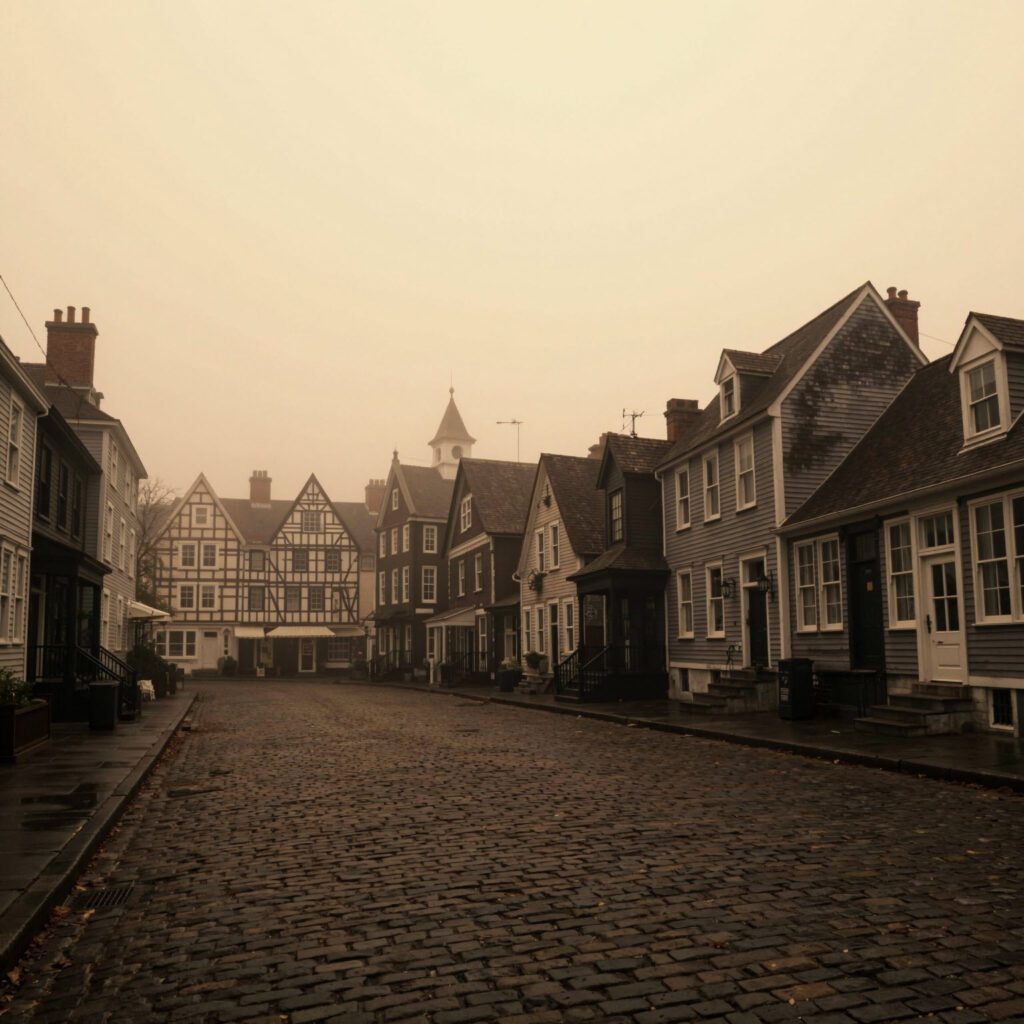
When you live in Daybridge long enough, you start noticing patterns. Certain names appear repeatedly in city records, on building cornerstones, and in the social pages. The Grangers. The Blackwoods. The Pierces. The Sullivans. The Vances. The Holmeses. The Ashfords. The Crawfords.
We call them the “founding families,” though that term sanitizes something more deliberate.
I’ve been researching Daybridge’s history for a feature piece, and what I’ve found raises more questions than it answers. Not scandalous enough to print—not yet—but worth documenting.
The Architecture of Power
Every city has its old money. What makes Daybridge unique is how these eight families operated as a unified entity during one specific period: 1911-1913.
Before that? Competition. Rivalry. The usual wealthy-family warfare.
After that? Fragmentation. The Vance family practically disappeared from public records. The Blackwoods split into warring factions. The Ashfords quietly divested from city holdings.
But for those two years, they moved in perfect synchronization.
The Bridge and Its Builders
I’ve traced the original incorporation documents for the Daybridge Municipal Bridge Commission, established January 1911:
- Chairman: Alderman Thomas Granger
- Chief Engineer: Robert Sullivan
- Primary Contractor: Blackwood & Sons Construction
- City Liaison: Reverend Jonathan Pierce
- Legal Counsel: Harrison Vance
- Financial Backer: Cornelius Holmes
- Architectural Consultant: Edmund Ashford
- Community Liaison: Margaret Crawford
Eight families. One bridge.
Here’s what’s strange: none of them needed it. The ferry system was functional. The wealthy west side wasn’t clamoring for easier access to the industrial east side. Several business owners actually opposed the bridge, claiming it would disrupt established trade routes.
Construction began June 1913. The bridge opened December 21, 1913—impossibly fast for a structure that size with 1913 technology. Workers operated around the clock. Three shifts. No holidays.
And in those six months:
- Seven workers died in “industrial accidents”
- Master butcher Guthrie Knox vanished from his shop near the construction site
- The “Ogre of Daybridge” legend emerged
- Multiple reports of “strange lights” and “unusual sounds” near the bridge at night
What Happened to the Vances?
Of all eight families, the Vances interest me most—because they’re the ones who disappeared.
Harrison Vance was a prominent attorney. His wife, Eleanor Vance, was known for her charity work and involvement in women’s suffrage. By all accounts, they were central figures in Daybridge society.
Then, after December 1913, nothing. No social announcements. No property transactions. The Vance estate was quietly sold in 1915 to a holding company that no longer exists.
I’ve found exactly one photograph of Eleanor Vance, taken at the bridge’s dedication ceremony on December 21, 1913. She’s standing apart from the other families, and if you look closely, she’s not smiling. Everyone else is celebrating. She looks haunted.
Three days later, the Vances were gone.
Patterns in Stone
The bridge itself is architecturally unusual. The stonework contains recurring symbols—geometric patterns, eyes within triangles, what look like astronomical alignments. They’re subtle, easy to dismiss as Art Nouveau decoration.
But I’ve found the same symbols on:
- The Daybridge Exchange Building (1914)
- The old Granger estate gates (1915)
- The Sullivan Memorial Library (1916)
- The Ashford Building cornerstone (1914)
Someone wanted these symbols visible throughout the city. Someone with access to multiple construction projects across different family holdings.
The Disappeared
People connected to the founding families have vanished at regular intervals:
- 1915: Officer Michael Reeves (was investigating “irregularities” in bridge construction records)
- 1942: Reverend Nathaniel Pierce (made “grave accusations” against city leadership before disappearing)
- 1968: Dr. Miranda Sullivan and her graduate research team (last seen conducting geological surveys near the bridge)
- 1993: City archivist David Ashford (found drowned; ruled accidental despite suspicious circumstances)
Every disappearance occurs near a seasonal turning point. Every one within a quarter-mile of the bridge. Every one connected to someone asking questions about 1913.
The Questions I Can’t Answer
Why would eight families—documented rivals—collaborate so completely on a single project?
What happened in December 1913 that made the Vances disappear?
Why do the same symbols appear on structures built by families who, publicly, despised each other?
And why does every attempt to access the sealed city records from 1913-1915 get denied, even with FOIA requests?
What I’m Looking For
If you have information about:
- The Vance family, particularly Eleanor Vance
- The bridge construction (June-December 1913)
- Any personal journals, letters, or photographs from 1913
- The eight founding families and their business relationships
Contact me at n.marsh@daybridgeguardian.com. All sources protected.
I’m a journalist. I deal in facts, evidence, corroboration. But right now, the facts are pointing toward something deliberate—something the eight families built together, then spent the next century trying to hide.
The city keeps its secrets. But eventually, every foundation cracks.
Author: Nadia Marsh
Investigative Reporter, The Daybridge Guardian